


Table of Contents
Introduction: The Magic of Taylor Swift's Live Performances
I have to admit, I'm always fascinated by Taylor Swift. Her shows aren't just musical masterpieces—they're an emotional roller coaster. And do you know what's most impressive about them? Her Stage presence. It's not just her voice that moves us, but the way she invites us—through her movements, her smile, and her energy—to become part of her story.
Stage presence is a powerful tool. It often determines whether your audience laughs with you, cries with you, or keeps talking about your performance long after the concert is over. But the good news is: You don't have to be a natural-born showman to master this skill. Stage presence can be learned and refined – with the right techniques and the right attitude.
When I watch Taylor Swift perform with authenticity and genuine emotion, I often think about how important it is to be real and vulnerable on stage. That connection with her audience isn’t accidental—it’s deliberately cultivated. And that’s something we can all learn, no matter how big or small our stage is.
If you're wondering how you can develop this skill yourself, I recommend that you first get familiar with your voice and your delivery. Our Vocal Exercises help you control your voice and keep it flexible—an important foundation for performing confidently on stage.
And remember: authenticity beats perfection. Your audience doesn't want to see a flawless machine; they want to see a real person who moves them with their performance.
My reading recommendation: You can learn more about Taylor Swift's secrets to success at The Guardian read about her in a renowned magazine that has closely followed her career.
What is stage presence, and why is it so important?
When you think of stage presence, what comes to mind? Probably an artist who captivates you from the very first moment, even before he or she has sung a single note. Stage presence is that invisible magic that turns a performance into an unforgettable experience. But what exactly is behind it?

Stage presence means creating an aura on stage that captivates your audience. It's not just about your voice, but also about your facial expressions, gestures, and the way you use your body. Music psychologists have found that 90%: Perceived Performance can be attributed to nonverbal communication. In other words, even the best vocal skills can pale in comparison if they are not backed up by a strong presence.
Why is that so important? Because music is so much more than just notes and lyrics. It is a emotional language, one that touches people, brings them together, and leaves a lasting impression. Artists like Taylor Swift and Madonna have figured this out. They strategically use their presence to forge a deeper connection with their audience—and that’s exactly what you can learn to do, too.
A good place to start is to get to know your own voice better and learn to control it. Our Voice Training Tips help you shape your voice so that, combined with your body language, it makes a strong impression.
But How do you develop that stage presence? It's not just about running around full of energy. It's about making a conscious decision to be fully present in every moment and to draw your audience in. Madonna has perfected this art by confidently pushing her own boundaries—both in her music and in her performances.
My recommendation for academic reading: Read more about the importance of stage presence in music by Univ. Prof. Dr. med. Dipl. mus. Eckart Altenmüller in his treatise: „Music as the Language of Emotions: Psychological and Neurobiological Aspects of Music“, to understand how nonverbal cues influence our perception.
Taylor Swift's Secrets to Success: From Authenticity to Engagement
Taylor Swift is a prime example of how authentic stage presence can win over the hearts of millions of people. When I watch her concerts, I’m always struck by how completely she loses herself in her performance—and that’s contagious. The secret to her success? Authenticity. She isn’t afraid to openly show her emotions, whether in her lyrics or through her facial expressions and gestures on stage. That makes her human and approachable, even though she’s one of the biggest pop stars of our time.
One of her hallmarks is the way she engages the audience during her shows. She takes the time to look out at people in the crowd, waves to them, and even shares personal anecdotes that make her fans laugh or cry. This connection with her audience isn’t accidental—it’s carefully thought out and an essential part of her success.
One of her most outstanding abilities is the Storytelling. Every one of Taylor’s performances is a little story that takes us on an emotional journey. Just think of her „Reputation Stadium Tour“: She managed to transform an entire stadium into a spectacle filled with revenge, love, and new beginnings—all through her ability to convey genuine emotions.
If you want to build this kind of connection with your audience, start by improving your singing and your interpretation. Our article on Vocal Exercises provides you with a solid foundation for gaining control of your voice and strengthening your emotional expressiveness.
Learn more about Taylor Swift's unique performances in this article at Variety, a leading magazine that provides in-depth analysis of her shows and her influence on the music industry.
Why Does Taylor Swift Divide Opinion? The Controversies Surrounding Her Career
Taylor Swift is more than just a global pop star—she’s a cultural phenomenon, and that means she also divides opinion. Maybe you’ve heard about her public feuds, her political statements, or the bold musical shifts she keeps making. But why does she so often spark controversy?
The reason is simple: Taylor is fearless when it comes to speaking out—both literally and figuratively. She addresses issues that others avoid and isn’t afraid to take a stand, even if that means upsetting people. To her fans, she’s an inspiration who stands up for herself and her beliefs. To her critics, she’s a polarizing figure who meddles too often in public discourse.
And that is precisely part of her success. Taylor Swift understands how to stay in the spotlight, and in a world where attention is a currency, that is an invaluable skill. The question is: Can you harness that fearlessness for your own stage presence without losing your authenticity?
If you're interested in dealing with criticism and the art of controversy, check out how singer Madonna uses similar tactics to stay relevant in the music scene.
Learn from the Best: Why Madonna Is So Successful Despite the Criticism
Let’s talk about Madonna—the „Queen of Pop.“ When you think of stage presence, Madonna is a prime example of how to capture the audience’s attention, even if you aren’t the strongest singer vocally. And I don’t mean that in a derogatory way at all! Madonna has taught us that stage presence sometimes counts for more than perfect vocal technique. Her recipe for success? Charisma, provocation, and the constant reinvention of her brand.
Madonna has never tried to be anyone else. Whether it was her provocative outfits, her controversial music videos, or her bold statements—she always stayed true to herself. That helped her build a loyal fan base and establish herself as a pop culture icon. And you know what? That very self-confidence is something we can all learn from her.
It’s about embracing your uniqueness and having the courage to be different. Not every performance has to be perfect, but it should always be authentic. Madonna has proven that even without classical vocal training, you can conquer the world’s stages if you manage to leave a lasting impression on people’s minds.
If you're feeling unsure, figure out what makes you unique. It could be your unusual song choices, your way of dancing, or your ability to make the audience laugh. Whatever it is, use it to your advantage!
You can learn more about how to develop your own style in our article on Vocal Style Coaching.
My reading recommendation: Learn more about Madonna's bold career and her influence on the music industry at Spiegel.de.
How to Develop Your Own Stage Presence
I know, the thought of standing on stage and captivating the audience can be pretty intimidating. But here’s the good news: stage presence isn’t some kind of magic reserved only for a select few. It’s an art that you can learn and perfect over time. It’s about controlling your energy, consciously using your facial expressions and body language, and having the courage to show your vulnerability.
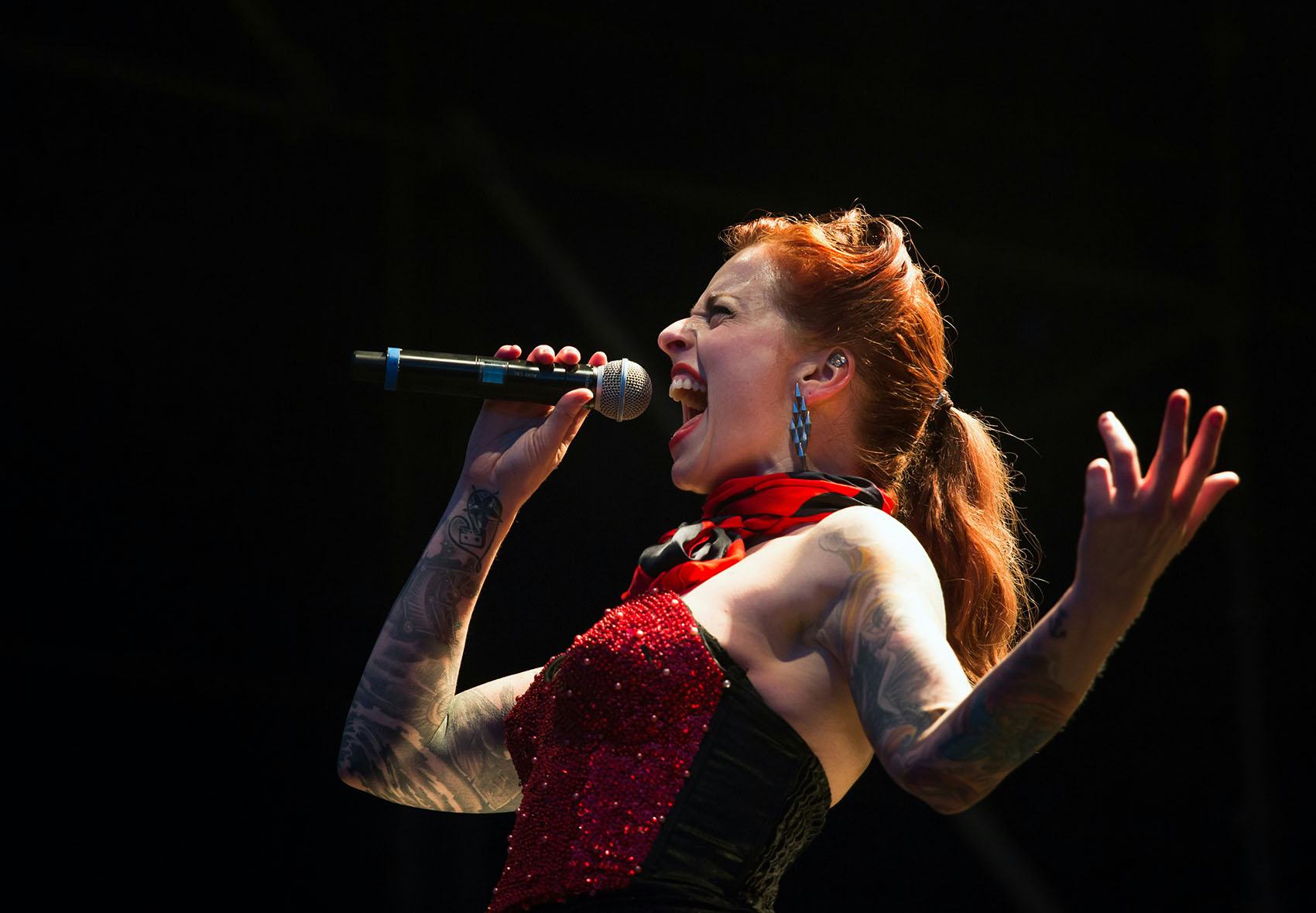
Practical Exercises for a Strong Stage Presence
- Mirror Training
Stand in front of a mirror and sing your song. Watch your facial expressions and gestures: Does your body language come across as confident or more reserved? It may feel strange at first to watch yourself, but it’s an effective way to improve your body language. - Practice Interacting with the Audience
Invite a few friends or family members to be your audience. Practice making eye contact, moving around, and interacting with your listeners. A smile, a wink, or a nod at just the right moment can work wonders and really connect with your audience. - Using Body Language Consciously
Open gestures come across as inviting. Stand up straight, and avoid crossing your arms over your chest—that makes you seem closed off. Your body language should convey that you’re enjoying your performance and are ready to share your energy with the audience.
Developing your stage presence takes practice and patience. But over time, you'll notice how your confidence on stage grows and you come to command the stage with ease. And never forget: Your uniqueness is your superpower. Use it!
Want to use your voice to its full potential? Then check out our Vocal Exercises for Better Voice Control to.
Stage Presence vs. Vocal Technique: What Really Matters?
That’s one of the questions I hear time and time again: Which is more important—a strong voice or an impressive stage presence? The answer isn’t as simple as it might seem, because it depends on the context. In classical music genres, technique may take precedence, but in the world of pop, a captivating stage presence can make the difference between a good performance and an unforgettable one.
Finding the Balance
Mastering both is the true art. Think of artists like Beyoncé. She is not only an outstanding singer, but also a performer who commands the stage with every step she takes. Her stage presence and vocal technique are perfectly balanced, making her one of the world's best entertainers.
But don't worry—you don't have to be a world-famous star to work on your balance. The key is to recognize your strengths and focus on developing them. If your voice is already strong, concentrate on your body language and stage presence. If you still want to improve your technique, targeted Vocal exercises might be just right for you.
And don't forget: Your breathing also plays a crucial role. It not only gives you the vocal support you need, but also helps you project calm and composure on stage.
What really matters?
At the end of the day, what matters is that you connect with your audience and take them on an emotional journey. Some artists achieve this through vocal brilliance, others through charismatic stage presence. The best performances, however, happen when both come together. Find out what suits you best, and work on balancing the two.
Check out our tips on Vocal Technique to further improve your voice.
Can stage presence be learned, or is it innate?
This is a question I’m often asked: „Is stage presence something you’re born with, or can I really learn it?“ The answer is reassuring: Stage presence can definitely be learned and improved! Of course, there are people who naturally have a certain charisma, but even they often work hard to perfect their skills.
What You Can Do to Improve Your Stage Presence
- Acting Classes
Acting techniques can help you enhance your expressiveness. They teach you how to get into character and convey your emotions convincingly on stage. Many successful singers—including stars like Taylor Swift—use acting methods to come across as more authentic. - Meditation and Self-Confidence Training
The more relaxed and confident you feel, the more natural your stage presence will seem. Meditation or breathing exercises before a performance can help you focus and calm your nerves. When you're relaxed, your audience will sense that calmness, too. - Seeking Constructive Feedback
We often don't see ourselves the way others perceive us. Get honest feedback from people you trust, or work with a coach. Sometimes, even small changes in your body language can have a big impact.
The Magic of Small Steps
It’s not about becoming a show-off overnight. Developing stage presence is a process that requires patience and regular practice. Be patient with yourself and celebrate small steps of progress. Maybe one day you’ll feel confident enough to interact more with your audience, or you’ll suddenly feel more at ease when performing a song. Every step brings you closer to your goal.
Tips for Singing with Confidence and how you can improve your stage presence.
Your next step: Try it out for yourself!
Okay, so far we've talked a lot about stage presence, authenticity, and the courage to give it your all on stage. But what do you do with all this information? The next step is to put what you've learned into practice—and that starts right here.
Give it a try and have fun doing it
It’s all about experimenting and discovering what works best for you. Dare to step outside your comfort zone and try out new techniques. You might be surprised at how small changes in your performance can affect the impact you make. The most important thing is that you have fun doing it. Because when you enjoy your performance, your audience will feel that energy, too.
Your Training Plan for Greater Stage Presence
- Take small steps: Set small, achievable goals for your next performances or rehearsals. Maybe start by practicing making eye contact with your audience or incorporating a new gesture into your song.
- Become a storyteller: Think of your songs as stories that you tell with your whole body and your voice. This will make your performance more lively and authentic.
- Practice regularly: Just like with vocal training, practice is the key here, too. Working on your stage presence regularly will help you feel more confident and improve your technique.
Our Support for You
If you feel like you're not making any progress on your own, I warmly invite you to sign up for a free trial lesson at CK Voice Lessons to book. Our Vocal Coaches They're experts at showing you how to take your voice and stage presence to the next level. It's like personal training for your performance—tailored to your needs and motivating.

I'm looking forward to seeing you grow and develop. Let's work on your performance together, and who knows—maybe you'll be the next Taylor Swift or Madonna to wow the audience!
Be sure to check out our article on Vocal Style Coaching and discover how you can develop your own personal style on stage.
Frequently Asked Questions (FAQs) About Stage Presence
I know there are a lot of questions when it comes to developing stage presence and feeling comfortable on stage. Here are some of the most common questions I come across, along with the best answers to help you perform with more confidence.


0 Comments