

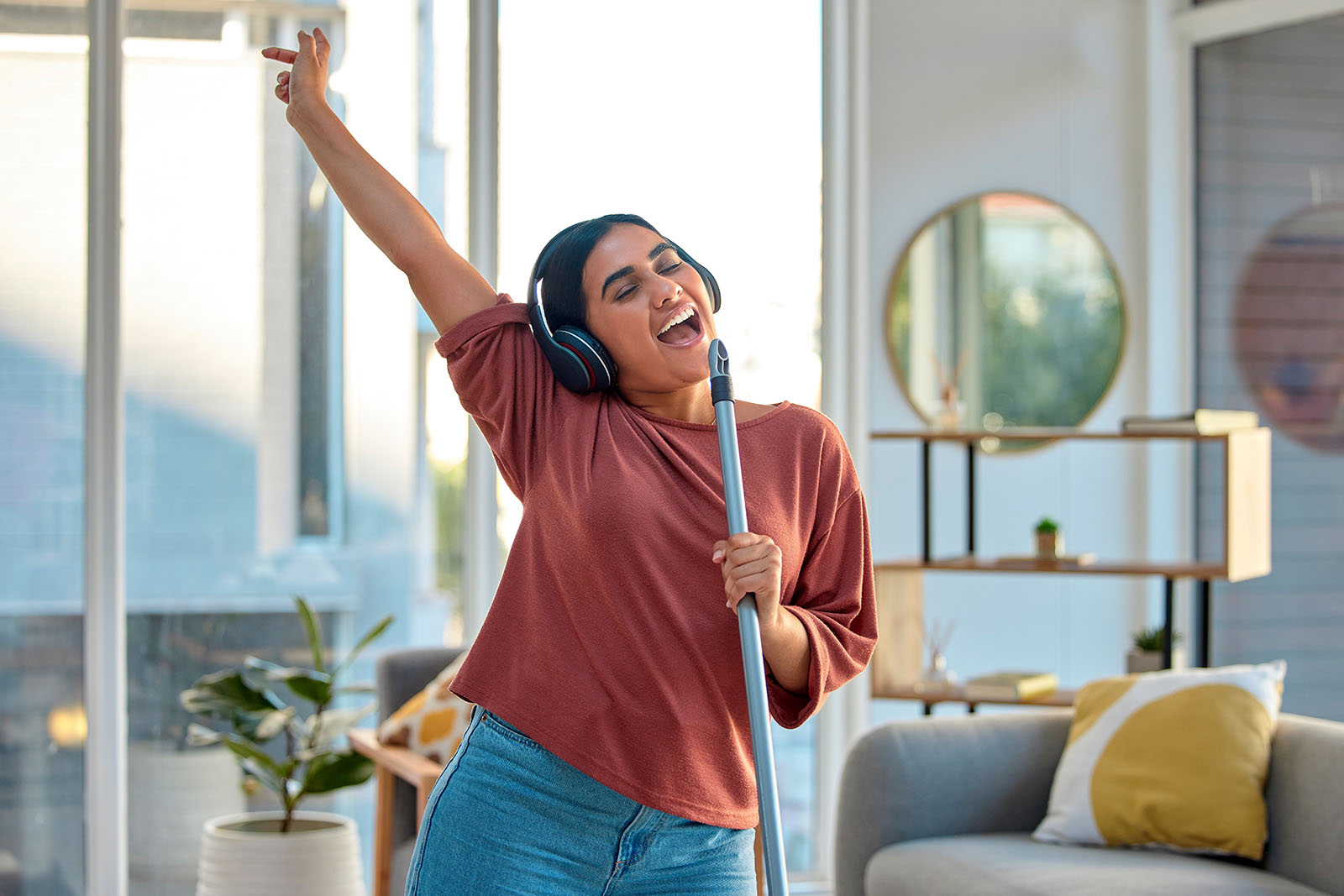
„Yes, anyone can learn to sing!“ we write with a confident smile. „Phew!“ some of you are probably thinking, „What a bold statement.“.
Even at this point, skeptics will object that there are many people who can only produce off-key notes. Or that many people can't even tell if they're hitting the right note.
To that we say: Have all these people ever seriously tried (under professional guidance) to learn how to sing? We’re already getting to the heart of the matter, where skeptics and advocates meet: Not everyone is born with the same talent; some are born as little singers, while others didn’t realize at a young age that singing comes almost naturally.
The truly talented are few and far between. Most people—even those who were naturally gifted as children—have to practice singing. Without practice, a voice won’t perform well, and above all, it won’t stay healthy. But the good news—as always—is: Anyone can learn to sing. Each of us uses our voice every day. That’s exactly where singing begins. Huh? What did you say? Yes, exactly! Speaking is the foundation of singing—you’ll learn more about that in a moment.
This article is about why we’re convinced that everyone—and I mean everyone—can learn to sing, how to do it most effectively, and what to keep in mind if you really want to sing in a healthy way.
Why Absolutely Anyone Can Sing
Our voice is our number one means of communication. In addition to body language, we rely primarily on our voice to consciously express ourselves. As infants, we do this with sounds and cries, which often turn into melodies. This is how we get our parents’ attention. By the time we’re just a few months old, our voices are already so loud that we can be heard through walls and over long distances.
From an evolutionary perspective—essential for survival. We depend on help during the first years of our lives. After only a short time, we acquire language as a tool for communication. We learn to articulate and to name things and needs specifically. These are all skills we need for singing. Singing builds on them. And the best part: Anyone can learn to sing – with the right instructions!
From Speaking to Singing
Just as you learn to speak, you can also learn to sing—preferably in an intuitive, natural way. A bit like in early childhood. This is the approach taken, for example, by the Speech-Level Singing to good use. Here, speaking serves as the foundation and, under the guidance of a vocal coach, evolves into singing. Sounds simple, doesn't it? In a way, it is. Anyone can learn to sing – It's simply a matter of method and training.
Finding Your Own Voice
Sometimes we lose a healthy connection to our voice. There are many reasons for this. Often it’s because we’re constantly stressed, or because even as children we were surrounded by people who used their voices in unhealthy ways. Or perhaps our sense of hearing isn’t particularly well-developed. Poor posture can also lead to persistent tension in the supporting muscles and make it harder for us to breathe, which in turn affects our speech and the sound of our voice.
Often, however, whether we can hit notes well and speak and sing clearly depends on our upbringing and natural disposition. But that doesn’t mean it can’t be learned. This is exactly where the „importance“ of our voice—mentioned at the beginning—comes into play. We have the ability to adapt our voice to different situations, and we can practice this in the Singing lessons take advantage of it—we modulate the sound.
Anyone can learn to sing – and achieve even more with the right vocal technique. Each vocal technique has a different goal and helps us expand the range of our voice—for example, in the lower or higher registers. The same applies to vocal style; as with everything else, regular vocal training is crucial to how successful we ultimately are.
Hearing as a Feedback Tool
Before we delve into the anatomy of the voice, let’s first talk about hearing. This is where the greatest fear of aspiring singers lies—simply not being able to tell whether a note is in tune or not. There are definitely significant differences in people’s hearing. Very few people have perfect pitch. Not even 0.01 % of people have it. They can tell with nearly 100 % accuracy whether a note is on pitch or not. The good news: You definitely don’t need perfect pitch to become a good singer.
Many stars and great singers don't have it either—that infallible sense of hearing. And most importantly: You can train your ear. How? With targeted singing and listening exercises. By listening to music as attentively as possible and repeatedly comparing the sound of our own voice to what we hear, we improve our listening and singing coordination. Singing along helps. Consistent practice does, too. Anyone can learn to sing, who is willing to train their ear. That makes us more confident with our voices.
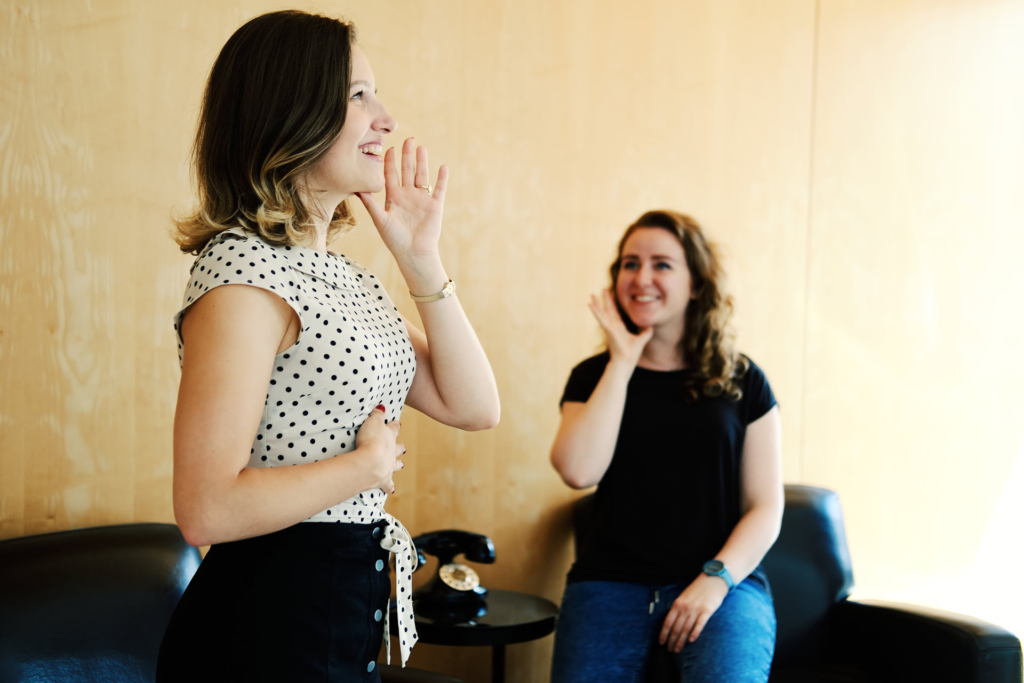
Your body is the instrument of your voice
The singing voice is not only the most unique instrument of all; above all, it is your body as a whole that influences the sound of your singing.
Let's say you want to Belting improve and have Christina Aguilera as a model. Then you’ll likely refine your breathing technique, learn to regulate the pressure on your vocal cords, constantly adjust your posture, and specifically engage the muscles immediately surrounding your vocal cords as well as the supporting muscles.
From this example, you can see that the voice has a lot to do with breathing, musculature, and articulation—all of which can be influenced. Just as you can strengthen your muscles through strength training, you can also train your voice, which is your instrument. This clearly underscores that, essentially, Anyone can learn to sing. It all comes down to „how.“.
Vocal Coaching for a Rich, Resonant Voice
Knowing how to sing is crucial to how well—and, above all, how healthily—you sing or sound. As adults, we cannot consciously recall the intuitive processes we were born with. Furthermore, our voice changes as we get older. Life and countless influences have all contributed to how our voice sounds today.
Ideally, we want to keep our speaking and singing voices healthy well into old age; we want to sound beautiful, sing, and—above all—continue to express ourselves freely. To make that happen, we strongly recommend seeking support from a qualified vocal coach. They are the experts when it comes to voice training. Through a voice analysis, they can determine what your voice needs to sound balanced. Your vocal coach can help you create a „training plan“ that guides you step by step toward your goal. And by the way, it really does work online. Anyone can learn to sing, regardless of age or location!
That way you avoid overloading your vocal cords. Most importantly, a singing teacher helps you avoid mistakes and use Vocal Exercises correctly, so that singing soon feels effortless. Because that's exactly where we want to get to: singing should feel easy, and then it does no harm. You'll also learn a lot about vocal care and Vocal Health. Because every voice is different, you’ll get exactly what you need to complete your journey toward a healthy singing performance. By the way, age doesn’t matter here. So don’t let people discourage you who don’t know enough about the Learn to sing Know this: It's possible for you, too.
Conclusion: Because Singing can be learned, anyone can learn to sing. Instead of learning through trial and error by teaching yourself, we strongly recommend a professional Singing lessons For anyone who is serious about improving their singing.
At our studio in Hanover or online from your own home? Head to Singing lessons near you and see how getting started works.

0 Comments