

Why We Love Movie Musicals—and What They Have to Do with You
Whether you're a musical fan or secretly find yourself tapping your feet to „The Greatest Showman“—movie musicals are moving. They stir up emotions, boost self-confidence, and deliver spectacular visuals and even more spectacular voices. But what exactly makes these scenes so iconic? And more importantly: What specific lessons can you take away from this for your singing and performance?
This article takes you on a musical journey through cinema, the voice, and their impact—with plenty of practical tips and insights from the fields of vocal psychology, pop culture, and stage performance.
🧠 Why do musical scenes work so well—even for people who don't like musicals at all?
Because they do exactly what every good performance wants to achieve:
You tell a story, touch, bring inner worlds to the surface.
Musicals force the performers to use their voices not just „beautiful“, but significant to use.
The best part?
It doesn't just work with a big orchestra and Hollywood lights.
It works in your living room, too. Or at your next open mic night.
And that's exactly what this is all about.
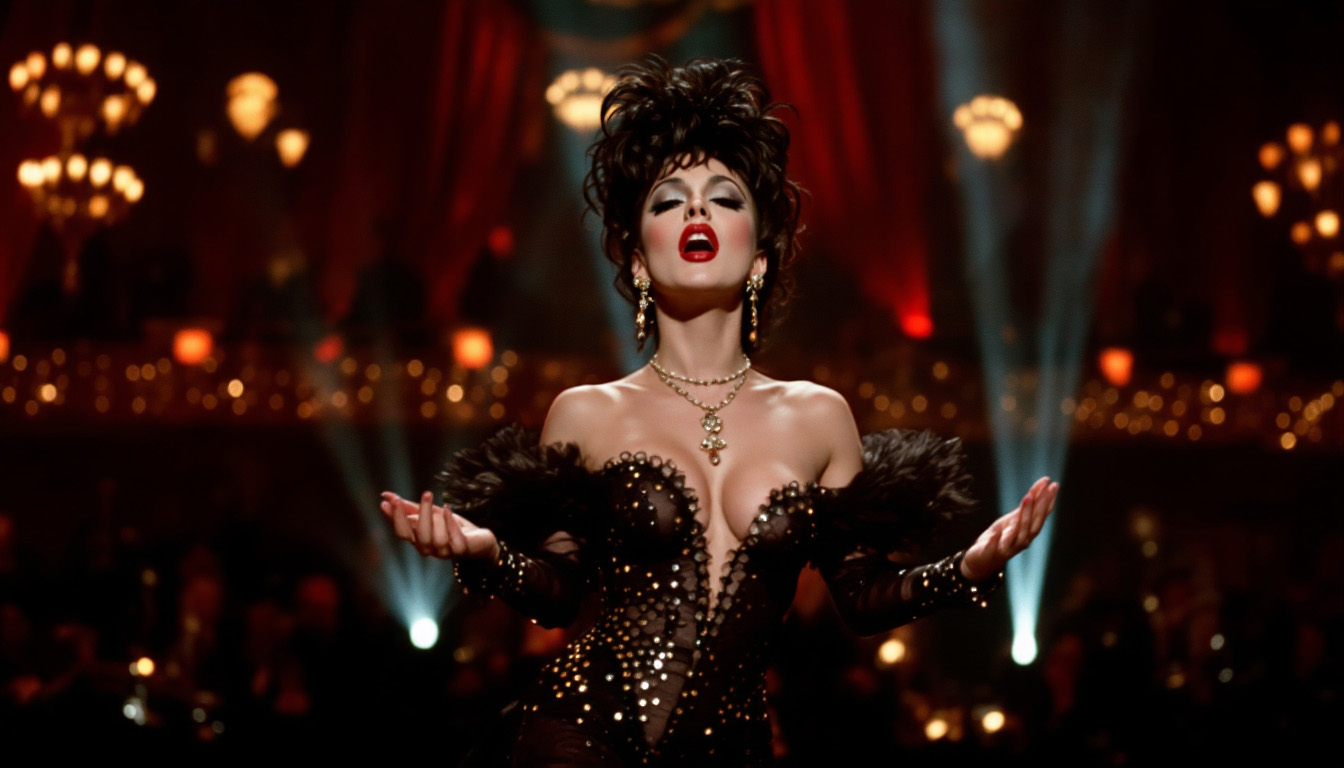
🎙️ „Don’t Rain on My Parade“ – Why Musical Divas Are So Damn Convincing
Example: Funny Girl. Barbra Streisand. The young woman who doesn't want to hide.
The song is one big inner rebellion:
„Hey, Mr. Arnstein—here I am. Whether you like it or not.“
The result? A wave of goosebumps. Not because Barbra's voice sounds perfect—but because she emotionally crystal clear is. Because every phrase knows where it's going.
💡 What you can learn:
It's not about singing a melody „correctly.“ It's about, Transforming Posture into Sound.
Practice this by not asking yourself the following while you're practicing:
„How do I sing this phrase?“
Rather:
„What do I want to say to the world at this moment?“
🎬 Popular examples from modern musicals—and what you can learn from them for your practice
🔹 The Greatest Showman – „This Is Me“
An anthem for the underdogs. And a prime example of: Vocal Confidence.
Keala Settle shows that courage doesn't mean singing perfectly—but rather nothing to hide.
The lesson you can learn from this:
If you hold back because you think you have to be technically brilliant, you're forgetting the real purpose of singing: to show who you are.
Focus on presence rather than perfection. Because the voice is never neutral. It is always either bold—or conformist.
🔹 La La Land – „Audition (The Fools Who Dream)“
Emma Stone doesn't sing with a powerful voice—but with a vulnerable, almost fragile honesty.
And that's exactly why it works.
The song thrives on, that it isn't smooth.
Your Lesson:
Sometimes we need less technology—and more truth.
Go ahead, to be quiet, when it needs to be quiet.
Because that's just as expressive as a belt.
🎭 The Rules of Storytelling—and Why They Apply to Your Singing, Too
One secret of great musicals: They follow dramatic arcs.
Whether it's about turning points, inner conflicts, or chorus releases—every song tells the story of a development.
And you can do that one-to-one take over your singing.
📌 Example 1: The Inner Question
„What am I really singing about here?“
Often, it's not the text that grabs you—it's the underlying emotion.
A song about heartbreak? Maybe it's actually about:
– Fear of being alone
– Shame at having made the wrong decision
– In defiance of the world
🎯 Practical Tip:
Pick your favorite song and answer the following questions in writing:
„What is the emotional subtext of this line?“
Turn it into a short story.
And then sing the song as an actor or actress.
📌 Example 2: Structure and Intensity
Musicals thrive on Contrasts. No song is forte throughout.
A good example:
„Defying Gravity“ from Wicked.
Beginning: Hesitant, gentle, vulnerable.
The End: Pure Explosion.
Your Lesson:
Many amateur singers start off strong—but by the second chorus, they’ve run out of steam.
Musical theater voices, on the other hand build suspense.
🎯 Practical Tip:
Try dynamic Step-by-Step Exercises:
- Verse: 30 %
- Pre-Chorus: 50 %
- Chorus: 80 %
- C-Part or Finale: 100 %
🎤 What Sets Musical Theater Training Apart from Classical Voice Lessons—and Why It Matters
In a musical, the focus isn't solely on the technical aspects. Rather, Intention, Presence, Expression, Courage.
That is why even a faltering voice in a musical scene often comes across as more intense than a perfectly trained voice devoid of emotion.
For you, this means:
You're allowed to breathe, tremble, stumble— as long as it sounds genuine.
Many musical theater singers say:
„We're rehearsing the character more than the song.“
🎯 Exercise to do at home:
Try switching roles:
- Imagine a character (e.g., 16 years old, rebellious, newly in love, angry at the world)
- Sing Your Song as this character
- Then sing the same song again in a „neutral“ way“
👉 And compare!
🎬 What Hollywood Doesn't Tell Us: Why Lip-Syncing Doesn't Convey Real Emotion
A quick reality check:
Many movie scenes are recorded in the studio and edited later during post-production.
What we see is not the actual performance – but a product.
And yet it often works. Why?
Because the best movie scenes appear visually and acoustically synchronized.
When Body Language and Voice contradict each other, the effect is reversed.
This teaches us:
A voice alone isn't enough. Presence requires the body, facial expressions, and posture.
Amateur singers, in particular, often make the mistake of singing with only their faces—or without moving at all.
Work out in front of the mirror:
– What does your body do when you sing?
– Which posture matches the emotion?
What's Not Perfect Is Believable—Why Imperfect Singing Sometimes Touches Us More
In pop music production, everything is quantized, tuned, and smoothed out.
In a musical? A wrong note is okay once in a while break – if it fits the emotion.
Examples:
– Anne Hathaway in Les Misérables – Tears + shortness of breath = Oscar
– Lady Gaga in A Star Is Born – Not perfect technique, but 100 % for real
💡 What you can learn from this:
Not every sound has to be „beautiful.“ But Every note must tell a story.
🎯 Practical Exercise:
- Sing your song with the goal of, technically flawless to sound like
- Then again, but emotionally raw, regardless of „mistakes“
- Listen to both recordings—which one sounds more moving?
Sing Like a Villain – Why Villains Have the Best Musical Songs
Think about the best musical numbers.
They often come from the Bad Guys:
– Ursula: „Poor Unfortunate Souls“
– Scar: „Be Prepared“
– Dr. Facilier: „Friends on the Other Side“
Why?
Because these songs theatrical, exaggerated, powerful are—perfect pieces for practice!
🎯 What this means for you:
If you only sing ballads, you're only practicing a part of your expression.
Dive into the Extremes: Sing a Song as an over-the-top character!
🎤 Practical Tips for „Villain Training“:
- Make your voice sound deeper
- Overdoing Articulation
- Playing with Tempo and Volume
- Facial expressions: Smiling, growling, hissing
From Broadway to Your Living Room—How to Use Musical Theater Techniques in Any Genre
You don't have to be a fan of The Greatest Showman to use musical theater techniques to your advantage.
Because what works there works as well as in pop, jazz, or German rap:
🔥 What you can do:
| Musical Theater Technology | Your Benefits |
|---|---|
| Figure Work | More expressive, even with cover songs |
| Dynamic Training | More excitement and goosebumps |
| Text Analysis | A More Authentic Interpretation |
| Full-body use | Stage presence even without a stage |
🎯 An exercise you can do every day:
No matter which song you're practicing:
- Imagine a scene (setting, mood, character)
- Sing the Song as this story
- Vary your tone: sometimes loud, sometimes a whisper, sometimes angry
👉 This sharpens your Voice Quality and Presence
What We Can Really Learn from Musical Divas
Musicals are Emotional training with musical accompaniment.
They show us:
- The voice is a tool, not an end in itself
- Perfection is overrated
- Goosebumps are caused by Truthfulness
So the next time you feel like your singing isn't „good enough“:
You'd better ask yourself:
Am I telling a story here?
If so, then you're already right in the middle of it—your very own musical moment.

🧭 Want to create your own voice drama?
Then come to a trial lesson at CK Voice Lessons.
Whether you sing pop, musicals, or ballads— We'll make you the star.


0 Comments