

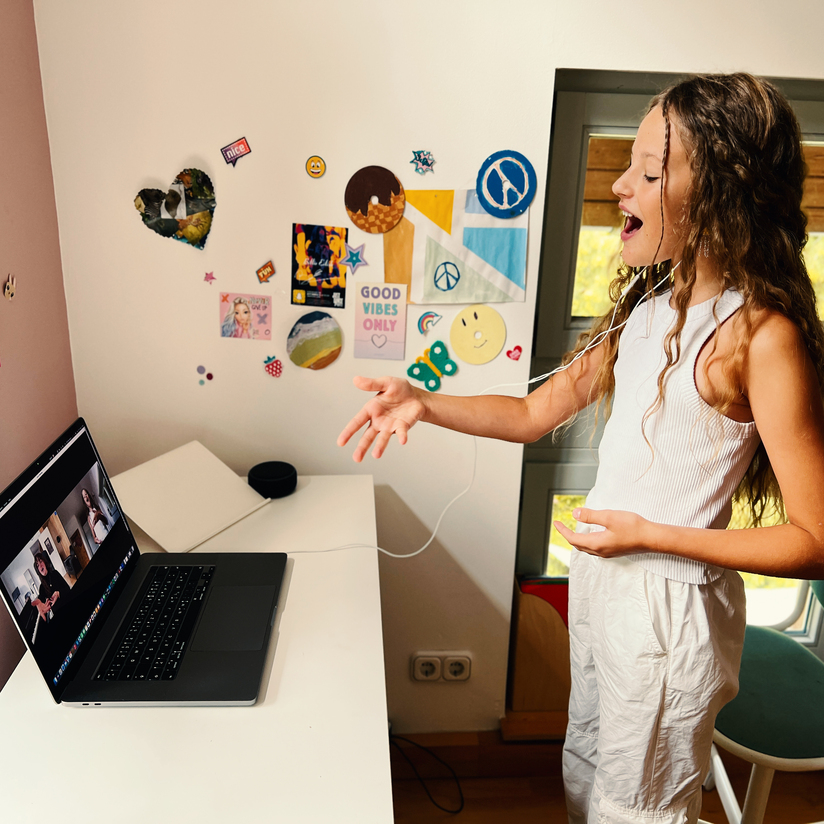
Of course, we parents only want the best for our little singers. We often overshoot the mark or simply don't know what our child's voice needs. At what age do singing lessons make sense for our little ones? What does a Vocal coaching for children so that it does no harm and brings healthy progress? We address all these questions in this article. So that your child can also experience the pure joy of singing and benefit from it as much as possible.
From what age can children learn to sing?
Do they only make squeaky sounds or is there more to it? These and similar questions are on parents' minds before they decide on a Singing lessons decide. And rightly so—after all, voice training should also be meaningful. In fact, there is no lower age limit. The appropriate age to start singing varies from person to person. As long as learning to sing is done in a playful way and in small doses, there’s no reason why children shouldn’t start learning to use their voices as early as age three.
The important thing is that your child enjoys it and is willing to engage with music. The voice is our primary means of expression; we use it constantly. That’s why one thing is particularly important to us: When it comes to teaching children to sing, we emphasize that it should be voluntary—our number one means of communication is too important for us to subject its use to pressure and coercion at such a young age.
Early Learning to sing for children not only promotes musical development, but also builds self-confidence and social skills. You can find out more about our programs for young singers on our main page for Singing lessons.
Learning to sing in a child-friendly way: Here's how!
A playful approach to singing lessons is particularly suitable for children under the age of five. Ease of learning to sing should also be a priority later on.
Our approach in the Singing Lessons for Children places great emphasis on playful learning that sparks a love of music. Discover how we can support your child on our page about Singing lessons.
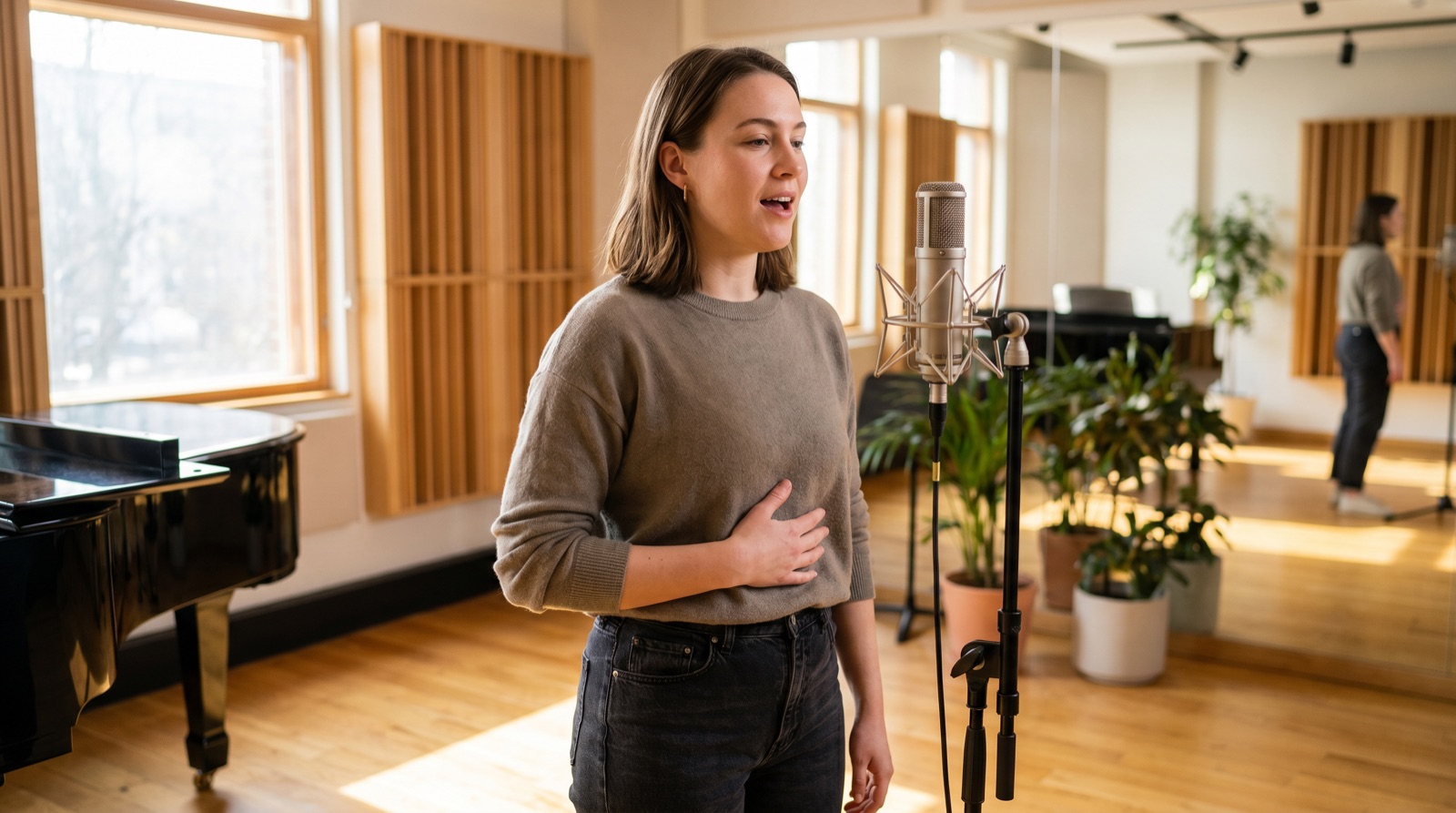
When it comes to singing, children have a strength that we adults have mostly lost - they use their voice intuitively. They usually practise natural belly breathing and know how to imitate sounds without thinking about it. The advantage is obvious: this way of singing or forming sounds is almost always vocally healthy, without even thinking about it. Due to stress and living conditions, we humans in affluent societies lose this natural approach more and more as we get older. Being able to sing well or use our vocal chords in a healthy way is by no means a question of age, but rather a question of access to our voice.
„The fact that children intuitively do the right thing is something a vocal coach can and should take advantage of in singing lessons.“ – Carl Keaton
In early childhood, for example, so-called "primal sounds" are very effective for developing vocal function. For the Pop Singing We're talking about sounds like a cat's meow or a baby's cry for the Twang in their voices or puppy-like whimpers to create a bit more of a “cry.” This not only teaches the youngest children to use their own voices in a targeted way, but it’s also a lot of fun for them. Children’s voices are very high-pitched, usually in the soprano range. Every voice is unique, but vocal training for children generally doesn’t go lower than soprano. Starting at age five, children’s musicals, for example, are also a great way to practice listening and imitation.
The duration:
„The younger the children are, the shorter the lesson should be. It’s better to have half an hour or 20 minutes of singing lessons twice a week than one hour of voice training all at once.“ – Carl Keaton
Singing lessons during voice change - top or flop?
Even when boys and girls go through puberty, that can Vocal Coaching continue. However, we do not recommend that beginners start voice lessons during this specific time, and the voice should under no circumstances be overtaxed during the voice-changing process. The guiding principle here is: Less is more! Similar to what we recommend for the youngest students, we suggest short voice lesson sessions, but several times a week. Some exercises or pitches are not possible during this time, but this is only temporary. In very rare cases, problems with the vocal cords can arise during voice change. In such cases, it is, of course, always necessary to consult a doctor and/or a speech-language pathologist.
Conclusion: It's definitely helpful to Voice Change staying on top of it—that way, teenagers will quickly become familiar with the new pitch, the sweet spot, and all the other changes in their voices.
Learning to sing at home or at an institute?
Both options are possible, and in our experience, they work very well. Some children feel more comfortable learning to sing in their familiar surroundings and are more likely to open up during singing lessons at home. That’s why online lessons are also ideal for kids and teens. When it comes to the youngest children, parents need to be present—at least at the beginning—but that’s no different at the studio.
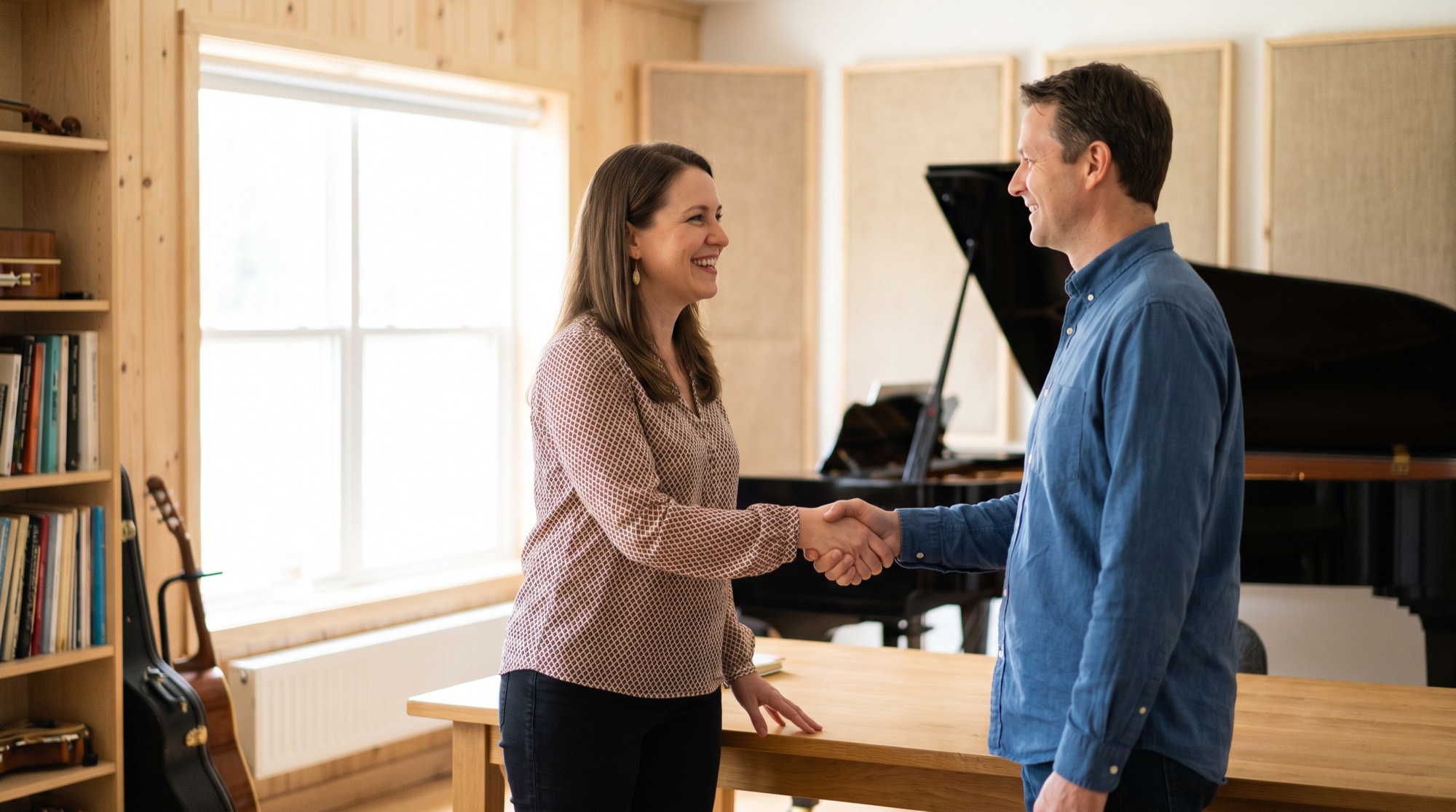
Here, the vocal coach is more accessible, which can be an advantage when teaching young children. For example, we offer a few Getting to know each other to complete at the institute and later to Online lessons to switch. This way, the vocal coach and the student can get to know each other, which helps younger children build the confidence they need for the subsequent online lessons; however, it isn’t absolutely necessary—for many children, it works just fine without an in-person session.
Is learning to sing online also suitable for beginners?
Yes, without a doubt. A good vocal coach observes the students’ movements during the live stream, listens carefully, and recognizes what the voice needs. In online voice training, instructions for vocal exercises are also given very precisely and demonstrated through singing. The online singing lessons is on par with in-person voice lessons in terms of quality, provided you have a good internet connection. Aside from not having to travel, there’s another advantage: the session can be recorded. This makes it all the easier to practice voice training between voice lessons.
Is your Vocal Coach Kids approved?
A vocal coach who works with children should have the relevant experience. Children learn differently. He or she should know how exercises are taught in an age-appropriate and fun way. In order for this to work, creativity is also required; stubbornly singing up and down the scale is not suitable for younger children. Even the youngest singers can learn, for example, to control their breathing when the Singing teacher or the Singing teacher With a little patience and dedication, you can find the right exercises. This will make practicing at home all the more fun. Of course, he/she must be sympathetic and have the necessary sensitivity for playful singing lessons. For your screenshot, Here is a checklist:
What should a vocal coach bring to the table for child-friendly lessons and what should their offer include?
- a free trial lesson to get to know each other
- Understanding of child-friendly learning
- Sufficient experience in teaching soprano pitch
- a selection of songs suitable for children of all ages
- Patience
- learn a playful approach to singing
- the possibility of shorter learning units
- Online lessons and lessons on site
- possibly Group lessons for siblings
Frequently asked questions Learning to sing for children
If you'd like to give your child the opportunity to discover the world of music, check out our comprehensive selection of Singing lessons to.
We wish you and your child lots of fun with the Learn to sing.
If you have any further questions on this topic, give us a call! We will be happy to help you.
Your CK Voice Academy team

Dear Karl,
It's great that you're encouraging the little ones right from the start!!!!!! It's soooo important to start early—and who knows, maybe this is where tomorrow's singers and pop stars are being shaped!!!! 🙂
Your work is great!